
Autumn Newsletter
Welcome to our autumn newsletter! We will be providing you with the latest updates from the farm and market garden as well as a wildlife update from Dave and introducing our volunteer Tim.
Stuart’s Update
Reflecting on another challenging summer, I do wonder if our modern agriculture system is fit for purpose. Record temperatures, prolonged drought and even wildfires. Nationally our grain harvest is well down, and livestock farmers have had to raid winter forage stores to keep their animals fed. It’s not only our climate that’s in turmoil wars around the globe have brought about record fossil fuel prices. I was shocked to read a large modern tractor consumes more than 500 litres of diesel during a 10-hour day.
Here at Haye Farm, we’ve been working at building resilience into our system for several years. Mob grazing our animals with daily moves optimises the performance of both animals and pasture. Incorporating trees (agroforestry) into the system is transforming the landscape. We’re producing extra forage for the livestock to browse, providing shade, fixing nitrogen and the deep roots bring up minerals and trace elements from depth. The tree canopy also extends the grass growing season by mitigating extremes of both cold and heat. The increase in wildlife across the farm has also been incredible (see Dave’s article later in this newsletter).
That same 500 litres of diesel will last us at Haye farm over two years. We sell our produce direct to our local customers, so food miles and our overall carbon footprint are a fraction of most conventional farms. Sadly, it’s still a big struggle for small local farms to compete with the efficiencies of scale achieved by modern intensive agriculture powered by fossil fuels.
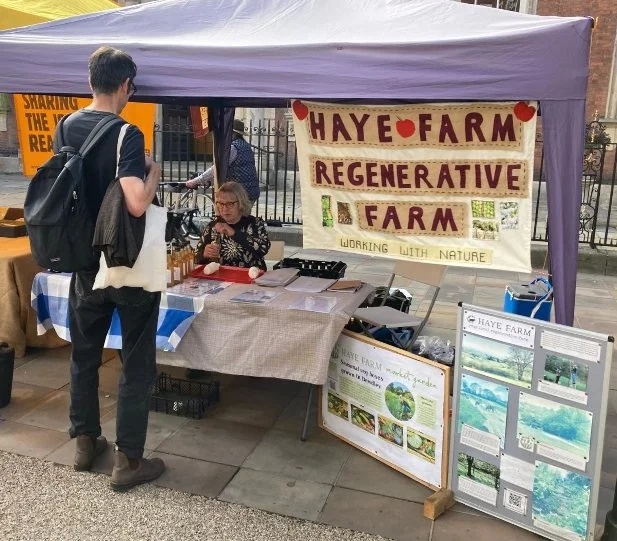
We were invited to have a stall at Worcestershire Biodiversity and Regenerative Food Festival a couple of weeks ago. It was great to meet other stallholders, and it really felt like there was growing momentum for regenerative farming.
I strongly believe regenerating our soils and building climate resilience into our system is essential as we move into an ever more uncertain world. I encourage you all to question the story behind the food that you eat and the impact it’s having on our planet. Please support local farms or risk losing them.
Market garden update from Liz
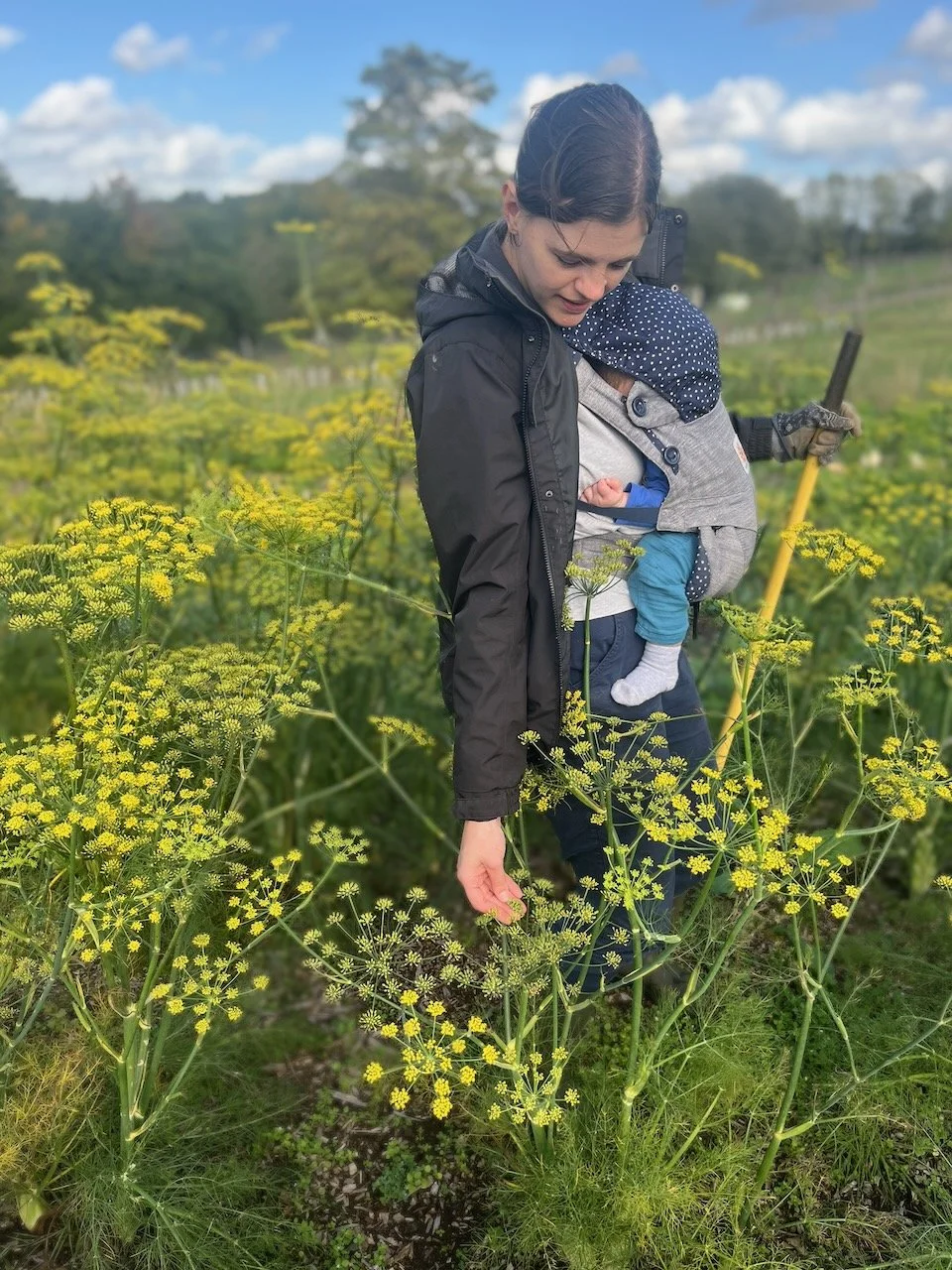
Despite a long hot summer, the garden has survived and yielded an abundance of tasty veg. A big thank you to my volunteer team for helping with the weekly harvests on Friday mornings. This year has been a juggle since Remy has been born but we have been able to keep the garden growing. Over the next few weeks there will be carrots, parsnips, butternut squashes, pumpkins and onions still available.
Although the relentless heat has eased off now, it is important to remember it and use the experience to increase the garden’s resilience going forward. What growing methods can we use, how do we protect and build the soil more and which crops can we incorporate to make a really robust, resilient system? As always, nature is our best teacher. Trees and perennial crops cope much better than annual crops with extreme conditions, so I will be looking at how to incorporate these into the garden, along with flowers for pollinators and more green manures. This year I sowed buckwheat and field beans for the first time and have left lots more weeds to grow. This is largely because I have been busy looking after baby and have not had time to keep the garden weed free, but it has proved an interesting experiment. Theoretically, having the soil more covered over the winter will improve the structure, soil life and will prevent compaction and run off from any heavy winter rains we have. It has also been reassuring to see insects still enjoying the flowers on the weeds and I can’t bring myself to pull them up after pollinators must have had such a hard time over the summer! It will be interesting to see the benefits over time and hopefully I can create a more resilient, diverse and thriving polyculture.
Farm update from Ryan
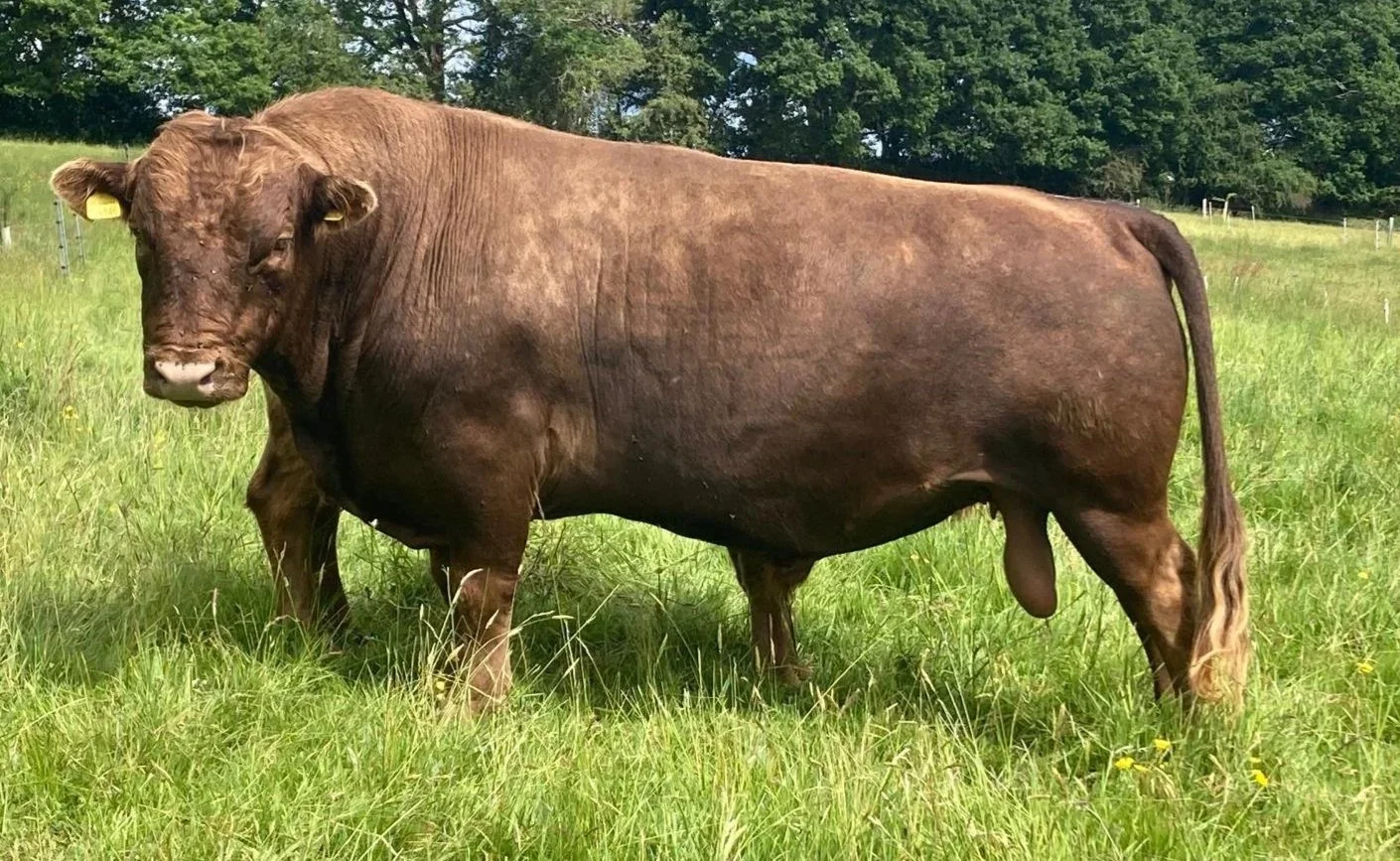
This autumn we have said goodbye to our bull Desert Lord. He has served us well over the last few years but as his daughters have grown up, it is time for him to be replaced. We found him to be nice tempered, you could go right up to him without being in danger but stubborn when it came to handling him for TB testing, he had his own pace. He has gone to a new home in Leicestershire, who have got a lot more work for him. Thank you, Desert Lord.
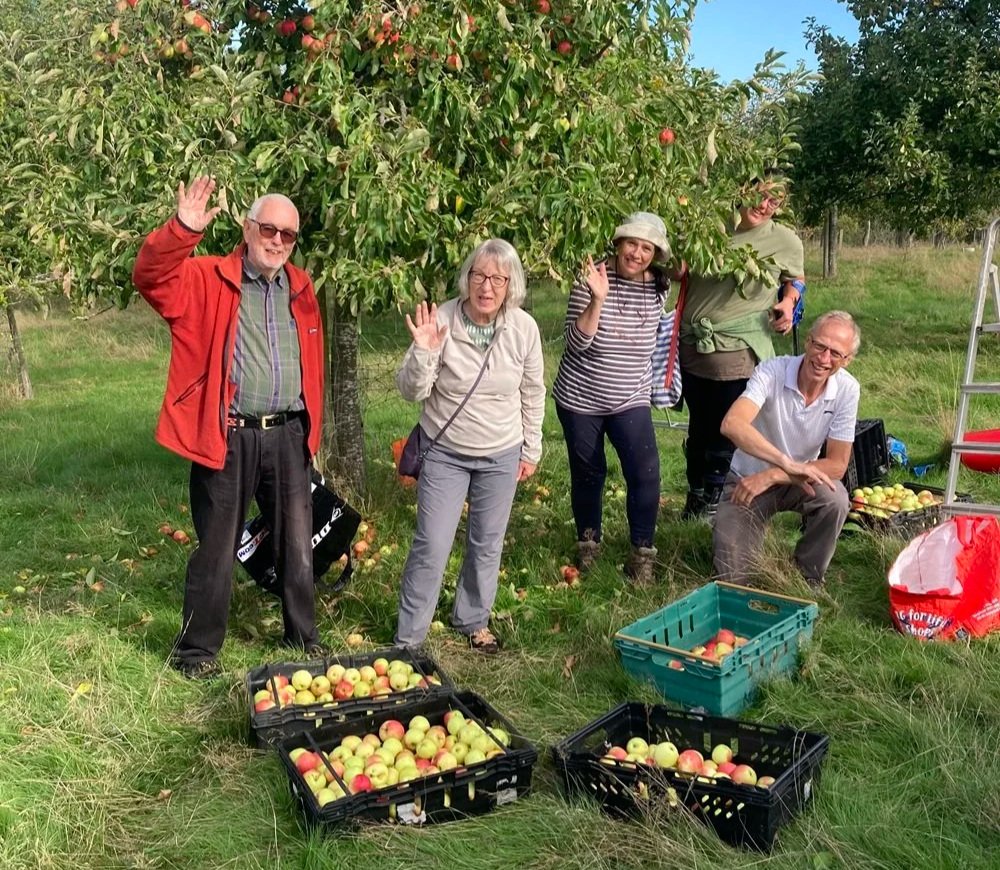
We have been busy picking apples with the help of the volunteers; it has been a bit of a mixed year in terms of harvest. Some trees have produced plenty whilst others have none. To my disappointment there was no Asian Pears this year but have discovered a new favourite Pound Green Pignose. It’s always interesting to taste the new blends of juice each year and try to come up with suitable words to describe it for Jane, our chief apple juice labeller. I’m not too sure if my “it tastes like apple juice” is much use compared to some of the more creative writing that the volunteers muster up with words such as “refreshingly zingy finish” or “intensely aromatic”. If you would like to try some of our juice or unusual varieties of apple, we will be hosting a stall at Bewdley Museum on Saturday 17th October 10am – 4pm, we will have apples and juice for sale.
Our last steer of the year is at the abattoir so if you have any special requests for beef or would like it fresh then let us know.
Tim
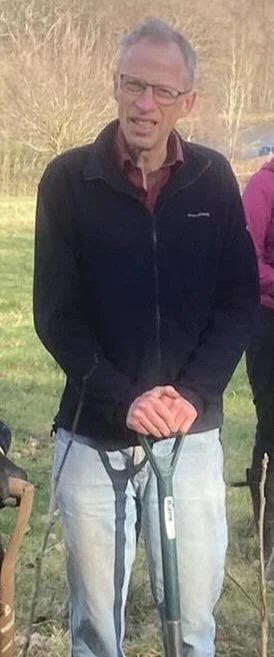
Hi, I'm Tim and I have been a Haye Farm volunteer since the group first formed back in 2020. At that time I had recently retired and moved to Bewdley; and, of course we were just emerging from the dark days of Covid. At that stage, I was looking forward to spending more time gardening; my retirement present to myself was a new greenhouse! Having worked for the Environment Agency for nearly 25 years, the natural world was always important to me. When I saw the 'ad' to volunteer at the farm's forest garden, it ticked a number of boxes for me; not only did it provide a little structure in my week, it also meant I could extend the scope of fruit and veg I could (help) grow, learn more about permaculture principles and, of course, form friendships with a number of like-minded people.
6 years on and all boxes ticked. I've also learned more about growing and harvesting apples (it's amazing how different heritage varieties can taste, and there's over 50 to try), I've learnt a little about agri-forestry whilst planting a host of different trees and enjoyed the fruits of our labours at a number of Haye Farm get-togethers. And recently, of course, we've had the added bonus of seeing Liz's market garden develop and thrive. Not surprisingly, it's the people you work with and the friendships you form that are the biggest plusses. Hopefully there are many happy years ahead!
Wildlife update from Dave
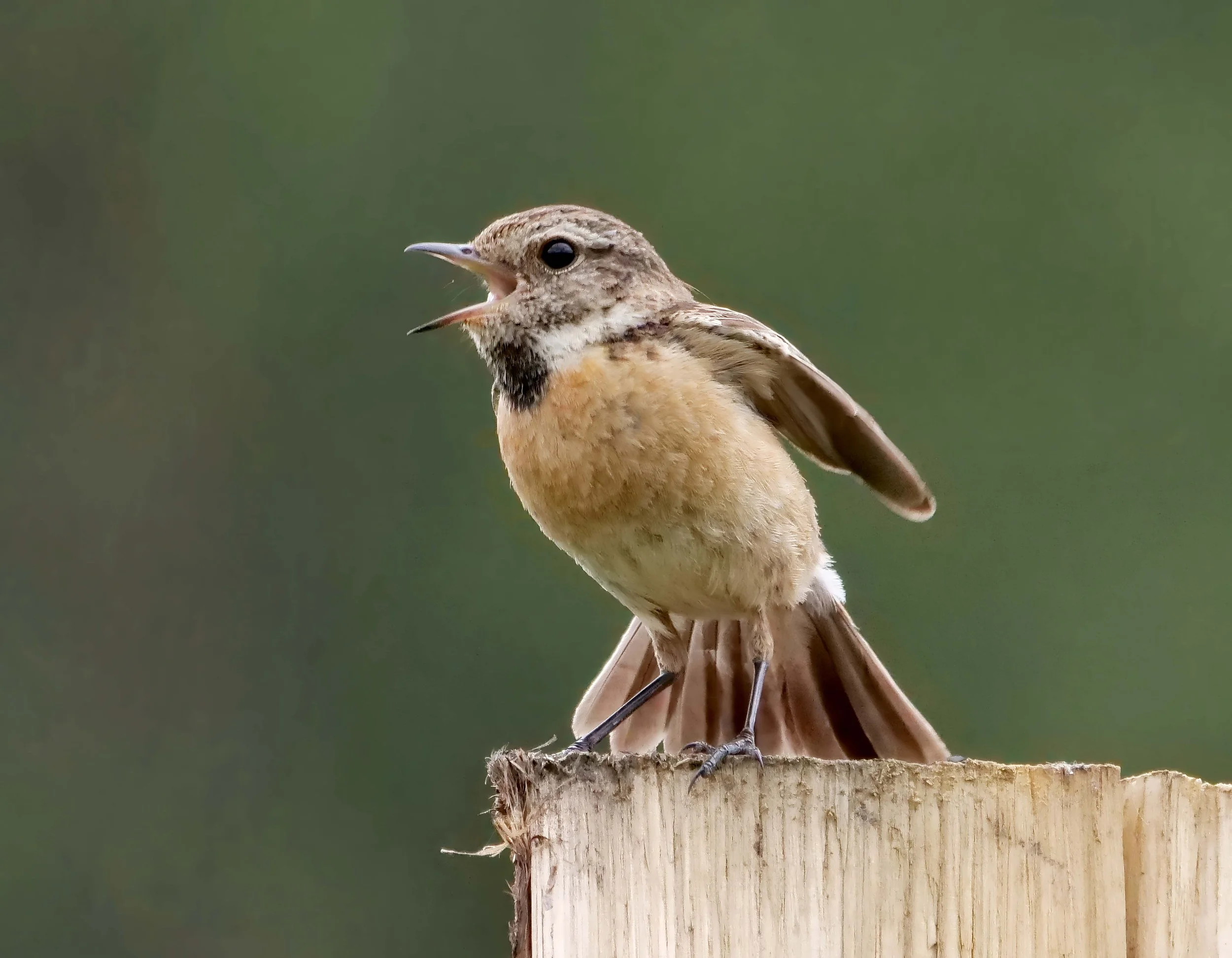
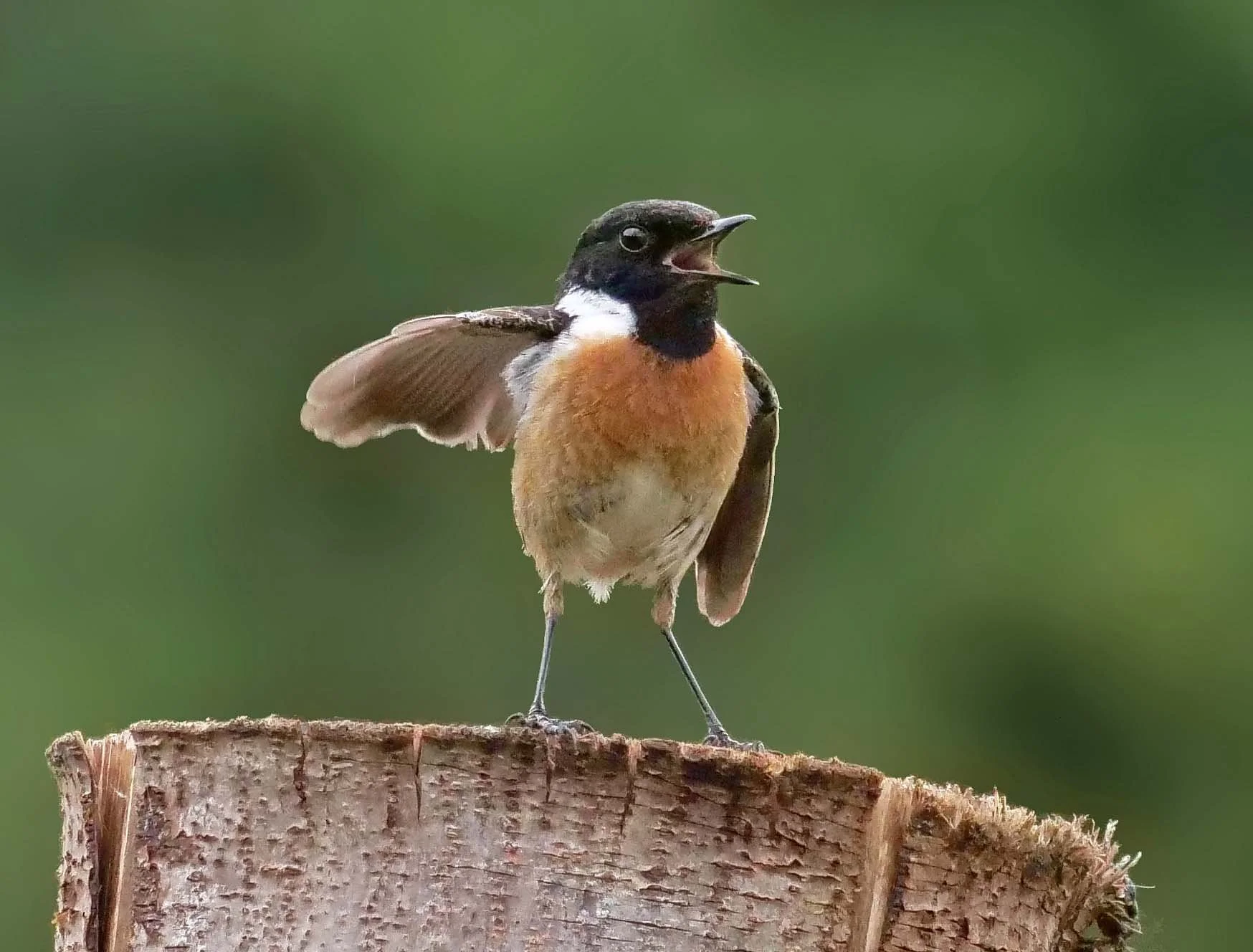
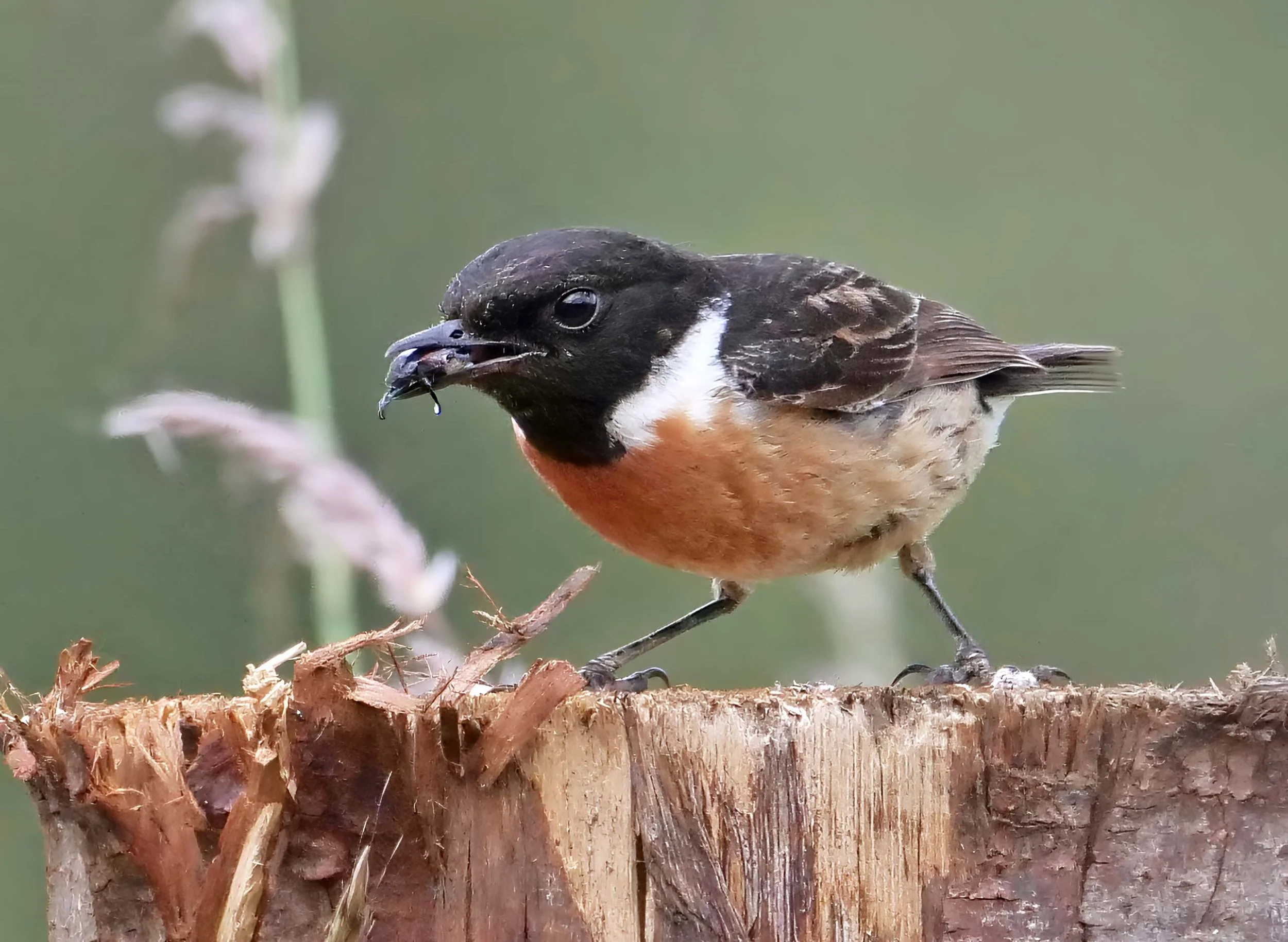
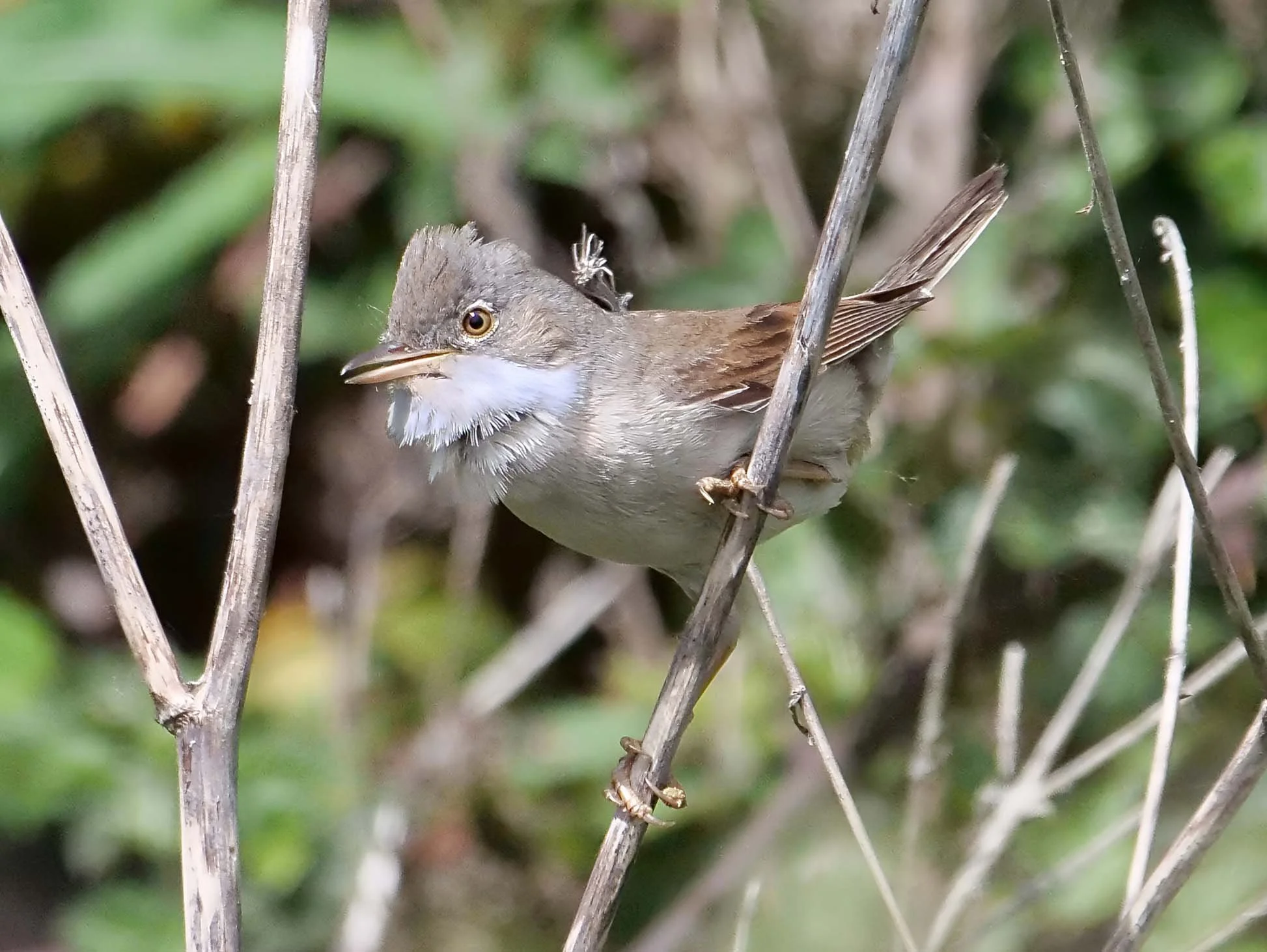
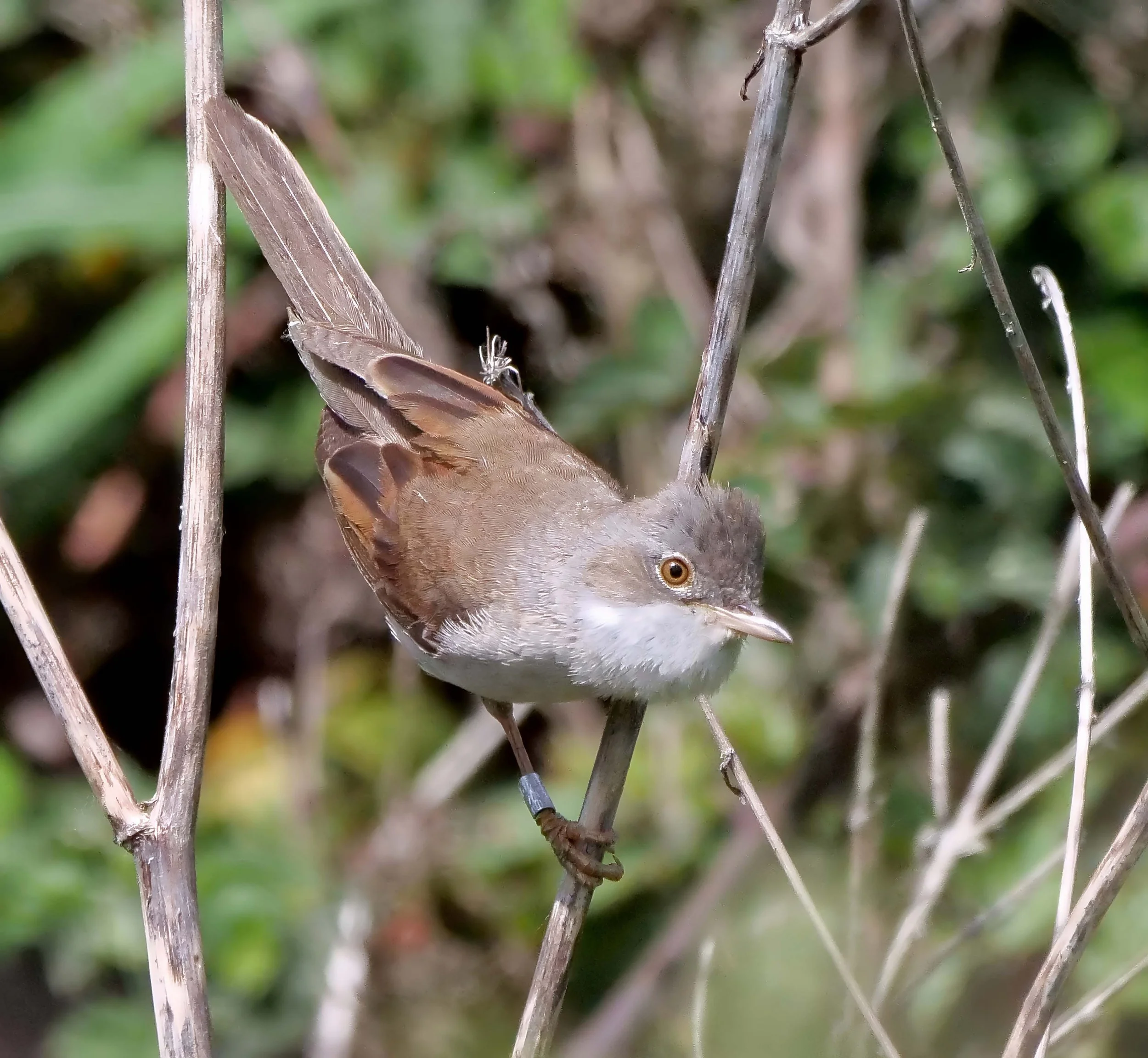
The regenerative farming methods at Haye farm have enabled the creation of a diverse range of habitats within the farm, providing a varied diet for the animals and also a very attractive environment for the wildlife that lives there. This was highlighted in 2026 with the arrival of two new breeding-bird species at the farm; the Common Whitethroat (Sylvia curruca) and the European Stonechat (Saxicola Torquata).
Following winter coppicing within the agroforestry corridors, the spring growth from the coppiced trees produced a dense 1-2 metre thicket along the length of the corridors. This dense undergrowth regularly provides safe nesting areas for farm inhabitants such as Blackbirds, Dunnocks and Robins. This year it proved to be very attractive to new nesting birds, Whitethroats and Stonechats.
The birds announced their arrival when the males started carrying out their display flights. It was a wonderful sight to see them take off from the taller, isolated trees and perform their ‘dancing’ flights while constantly singing as they dropped down into the deep thicket within the corridors. The male Stonechats showed their agile, dance-like song flight while displaying their white wing-patches and rusty-red chest. The Whitethroats launched vertically and performed their jerky ‘parachuting’ flight. It was easy to see why the Whitethroat is nicknamed the ‘singing skyrocket’. The flights were repeated regularly throughout the Spring.
Set between lush, insect-filled meadows, the developing agroforesty regime provides a perfect habitat for the birds. I saw two pairs of Whitethroats but wasn’t able see the deeply-sited nests. The Stonechats were more prominent, constantly ‘chatting’ and maintaining their territory. I was lucky enough to be there with my camera when 3 fledgling Stonechats emerged from the nest.
After a successful 2026 we look forward to encouraging more new species at the site develops at Haye Farm.
Video at https://www.youtube.com/@wyreforestdave
Upcoming Events
Saturday 17th October 10am-4pm - Apple Day at Bewdley Museum
We will be back at Bewdley Museum for our annual Apple day, we will be showcasing the multiple variety of apples we grow at Haye Farm. Come and visit us and have a taste of the scrumptious apples and juice. There will be an opportunity to purchase varieties not found anywhere else, such as Egremont Russet, Winter Banana and Orleans Reinette.
Winter Time - Shop Opening Times
Our farm shop is open:
Tuesday - 13:00 - 14:00, Saturday - 09:00 - 10:00
Market garden veg is available on Saturday mornings.
We have a fresh supply of beef, lamb and juice available. Fresh apples and pears are currently available. Those wishing to purchase outside of these times can email haye-farm@outlook.com or call Stuart on 07732 489195 to arrange.