
Spring Newsletter 2026
Dates for your Diary:
Friday 29th May 7 – 8pm: Forest Garden and Orchards Tour
Saturday 20th June 10am – 12pm: Joyful Composting Workshop
Saturday 27th June 10am – 12pm: Building Soil Health for Gardens and Allotments Workshop
Market Garden Update from Liz
This time of year is so exciting - the days are getting longer, seeds are germinating and the beds are gradually filling up with crops. I can’t help but look forward to the harvests of the summer and all the tasty veg that will be pulled from the garden this year.
On the garden, I have recently started hosting a weekly volunteer group. These sessions provide a valuable opportunity to learn about growing veg and enjoy time outdoors while supporting the garden with carrying out a range of tasks. If you would like to be a part of these sessions, do get in touch.
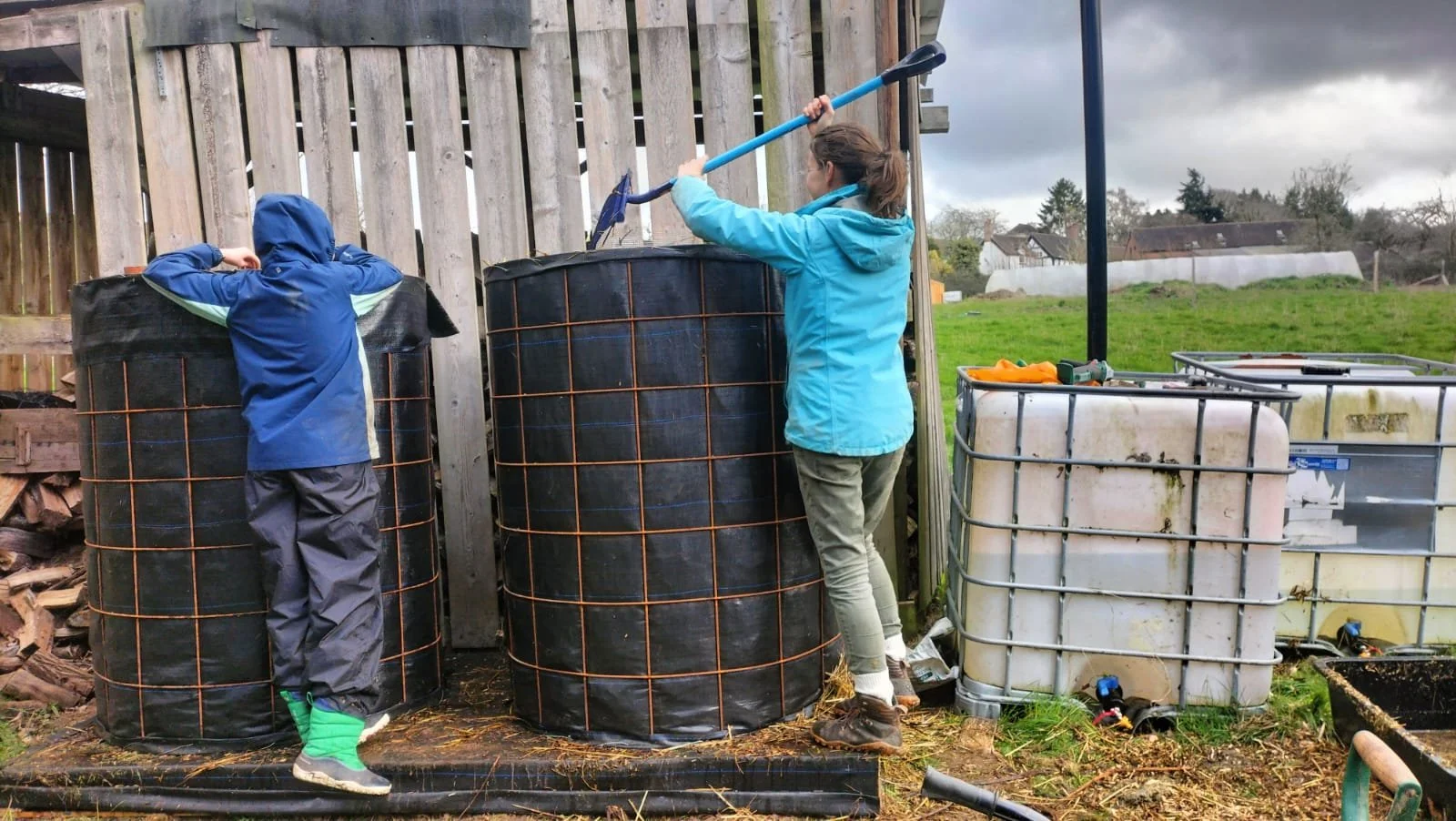
One of our recent sessions was led by Claire from The Compost Connection, who has written a little about herself below and will be running some workshops over the summer. Claire has built a couple of Johnson-Su bioreactors on the market garden field, which should produce some very biologically active compost over the next 12 months. It was very interesting to see this system being set up and learn so much from Claire – she is a real wealth of knowledge and it has been wonderful to work with her on this project. Our volunteers were very helpful and got stuck in with assembling everything.
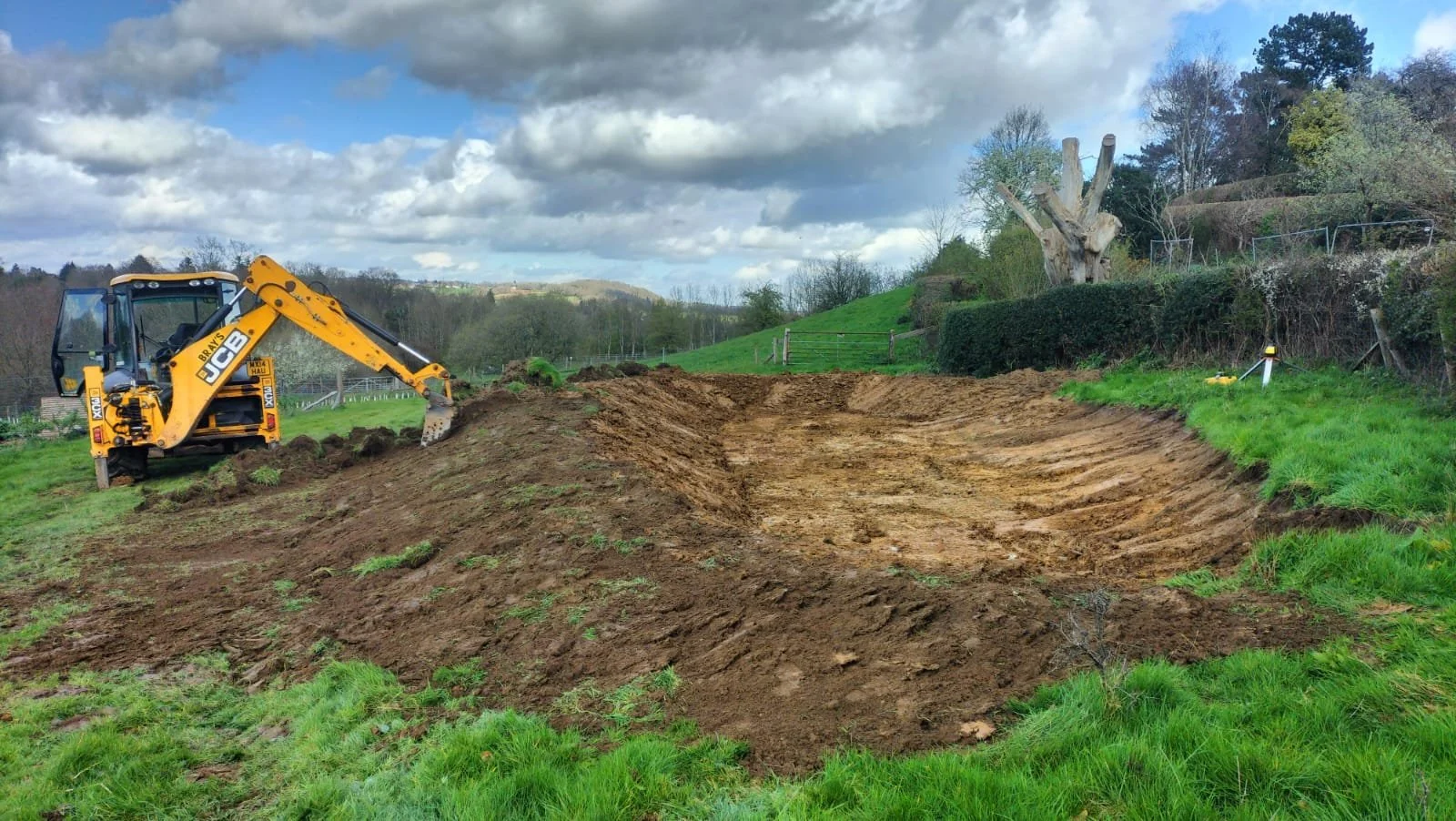
In April, the garden had a new pond dug as part of “Slow The Flow” – a local scheme funded by the council, creating pockets of water storage on various sites to “slow the flow” to the river and reduce flooding. This should be most beneficial when we have very heavy rain, which can cause flash flooding. Of course the pond will also bring other benefits to the farm. Firstly, it will boost the biodiversity of the site – something which we are really passionate about here at Haye Farm. I have already seen lots of birds (including swallows and starlings) enjoying the water and it will be lovely to see the ecosystem develop around this new habitat. Secondly, we may be able to use some of the captured rain water to irrigate the garden. This would reduce our reliance on mains water, be healthier for the crops and help to better manage dry spells.
It won’t be too long now until we are harvesting a range of veg from the garden. As many of you will know, it is also not long until I am expecting another little arrival! I aim to plant up all the beds before the baby is born, at which point I will have a little extra help to cover me in the garden and the focus will then be on harvesting – the best bit! This year, we will still have a set veg collection day, but rather than have set pre-packed veg boxes, customers can decide the amounts and types of veg they would like each week and pay on a “as you feel” system. This will allow for more flexibility for both myself and customers, and I think will teach me a lot about people’s preferences! I shall send out another update when the time comes to those of you who have had veg from me in the past, or expressed an interest in veg this year, with all the relevant information.
Introducing Claire
Hello, I’m Claire. My son, Ben, and I first met Stuart a few years ago at a Pasture for Life event about soil, and we’ve kept in touch since then.
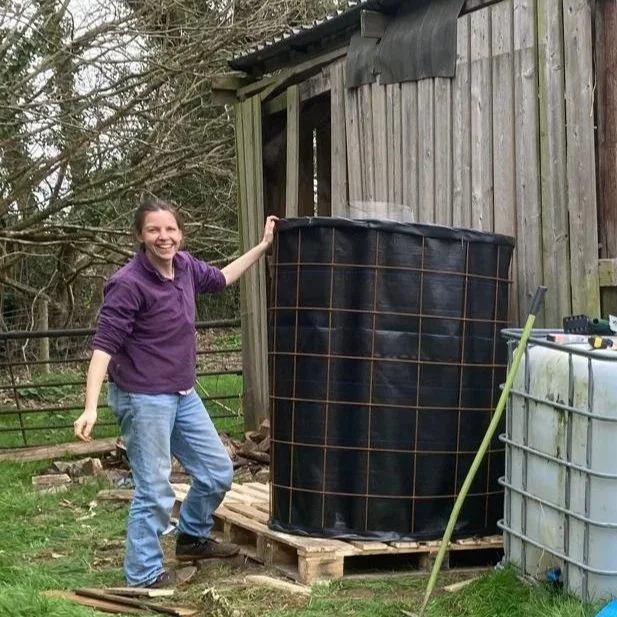
I work supporting people and organisations with enjoyable, practical knowledge that helps create more climate‑resilient spaces and community wellbeing. Much of my time is spent hosting hands‑on workshops about composting, soil health, food growing and fermentation, as well as setting up communal composting spaces and wormeries to transform food waste into a precious resource for feeding local soil. Most of this work currently happens in Birmingham, but I’m looking forward to hosting some workshops at the farm over the summer months.
We were recently at the farm building two Johnson–Su bioreactors (see image) - a simple system that produces a high‑quality compost ideal for improving soil health. I was very grateful to the market garden volunteers for their help soaking the straw/manure/woodchip/grass mix and adding it to the bays...many hands definitely made lighter work! In twelve months we’ll harvest the compost; some will be used by Liz, and the rest will be shared with community projects that want to improve their soil. It will be interesting to look at it underneath the microscopes as it will have a very high concentration of microorganisms.
As previously mentioned, I will be hosting some more workshops at the farm over the summer (see workshops at the top of the page). The hope is that this will raise more awareness of the farm, while also offering the community a welcoming space to learn and build confidence in these skills. Ben will also be joining some of the market garden volunteer sessions while Liz is on her maternity leave - we are looking forward to meeting you all!
Farm Update from Ryan
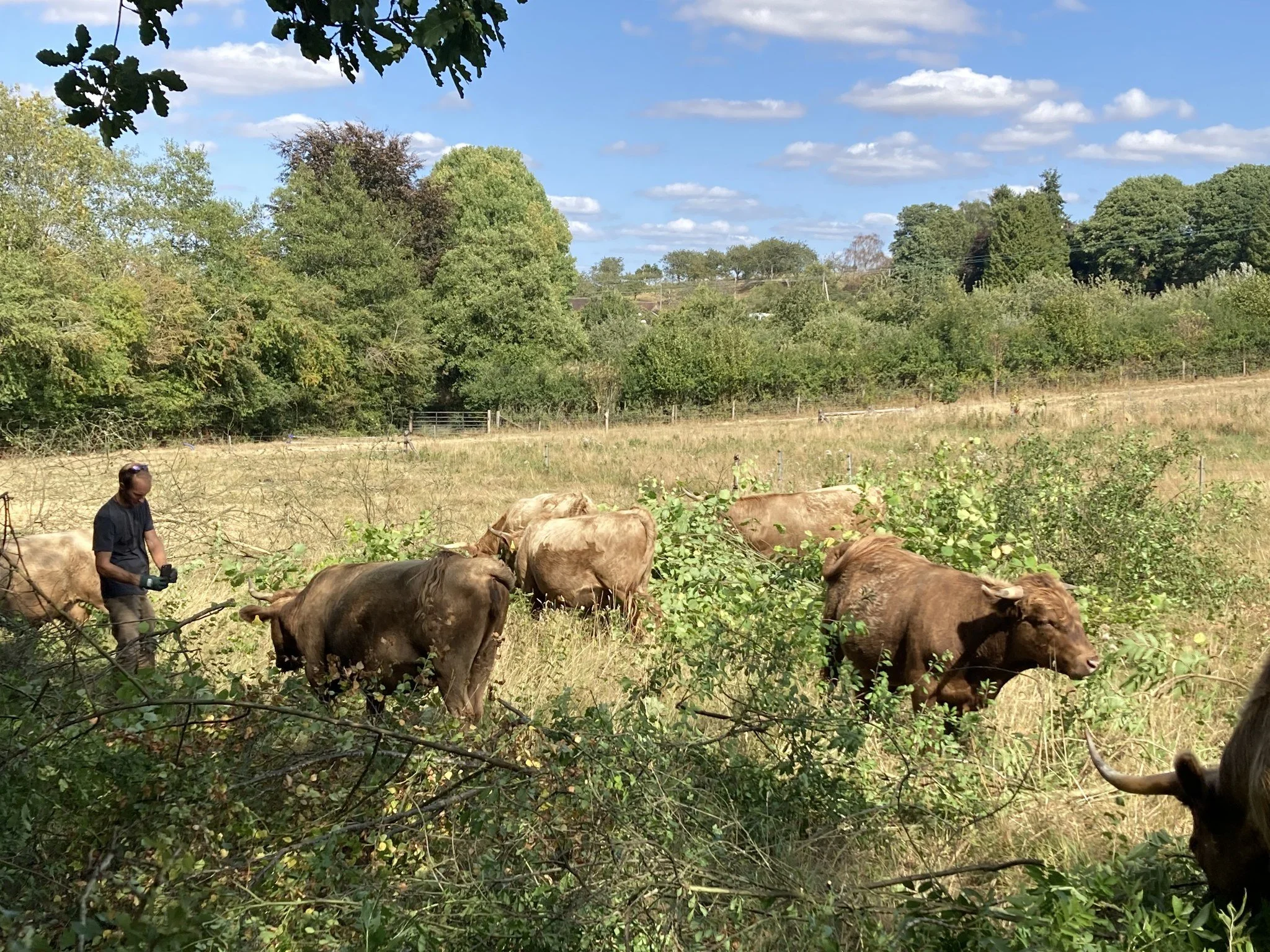
With it being so dry last year and the grass not growing, we decided to downsize our herd of cattle and flock of sheep. Our aim is to be able to keep the cattle out on pasture all year without having to feed them supplementary hay. This year, we managed not to feed them hay until February, whereas in some years, we have had to start in October. To achieve this, we have reduced our number of breeding cows to five—Lissy, Lulu, Orchid, Olive, and Pumpkin—from 13 a few years ago.
Another measure we plan to implement is to stop grazing certain fields earlier in the year, allowing these to be left as standing hay for the cattle over winter. Hopefully, reducing the amount of hay we need to purchase will make the operation more financially viable and decrease our reliance on fuel for making and transporting hay.
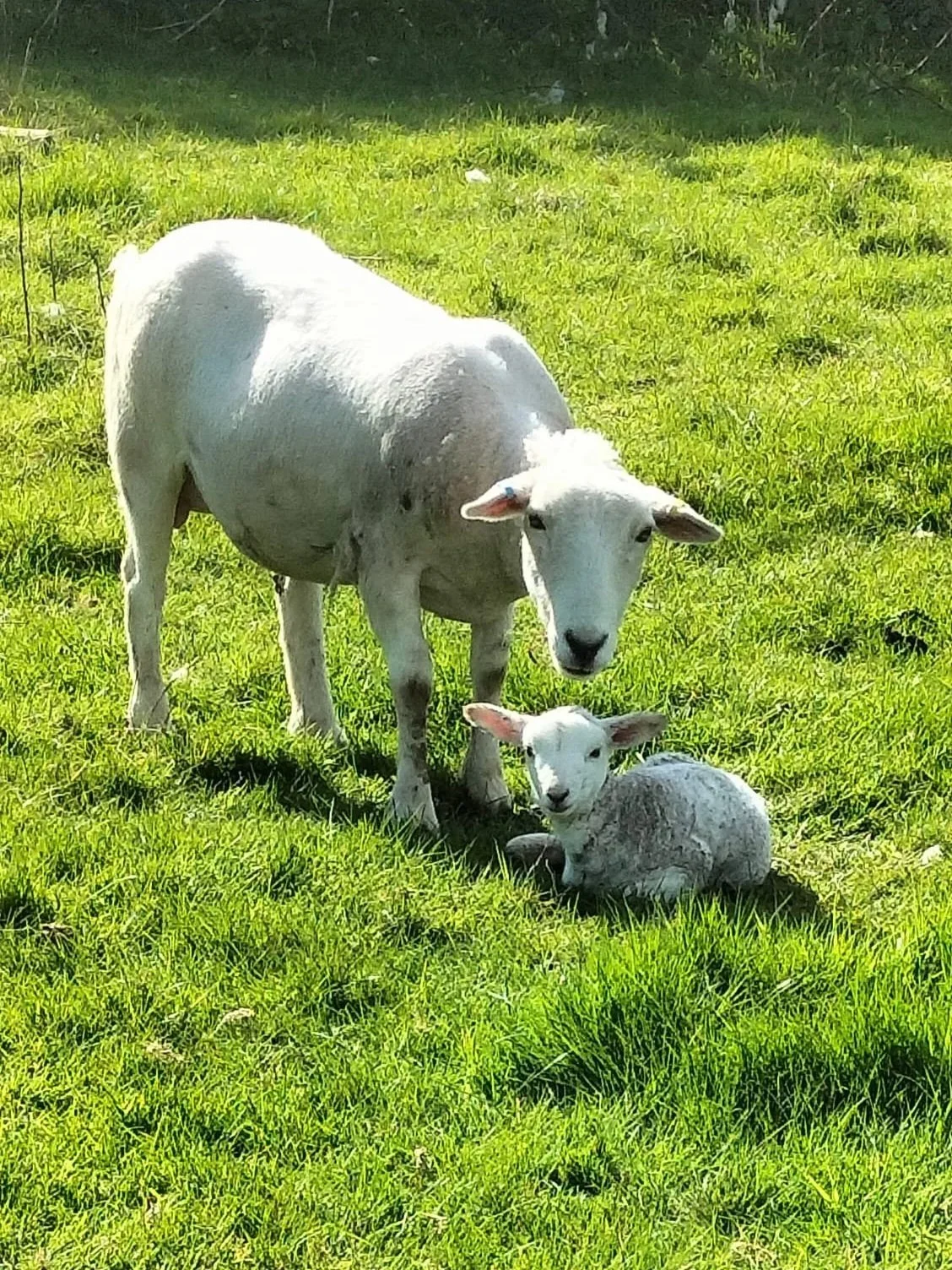
In previous years, with a larger herd, we split calving into two groups—one in spring and one in autumn. This allowed the heifers (first-time cows) an extra six months of growth, so they gave birth at two and a half years instead of two.
With only five cows now, we thought it better to return to spring calving for all. This way, when their previous calves are weaned, the cows have fresh grass, and the mums produce better milk for the new calves. As a result, we have only two calves this year—Ruby and Rosie—from first-time mums Olive and Pumpkin, giving the other three cows a well-earned rest until next year.
This year has been slightly disappointing with our sheep. We have reduced the flock to five ewes, four of which have given birth so far—one set of twins and three singles. Fortunately, all the lambs are healthy and doing well. In the coming years, we hope to build the flock to a more sustainable size, appropriate for the land, and maintain enough numbers to keep the farm shop stocked.
In other news, we have been busy coppicing some of the hedgerows over winter and are now re-fencing them to prevent the livestock from eating the new growth, although the fences don’t seem to stop the muntjac from getting in. So far, this year looks better in terms of farm growth; with some warmer weather and a little rain, the grass seems to be taking off.
Shop opening times:
Tuesdays 1-2pm
Saturdays 9-10am
Or email us to order outside of these times.
Introducing Shaun
Hello everyone. In case you’ve not seen me about on the farm, my name is Shaun.
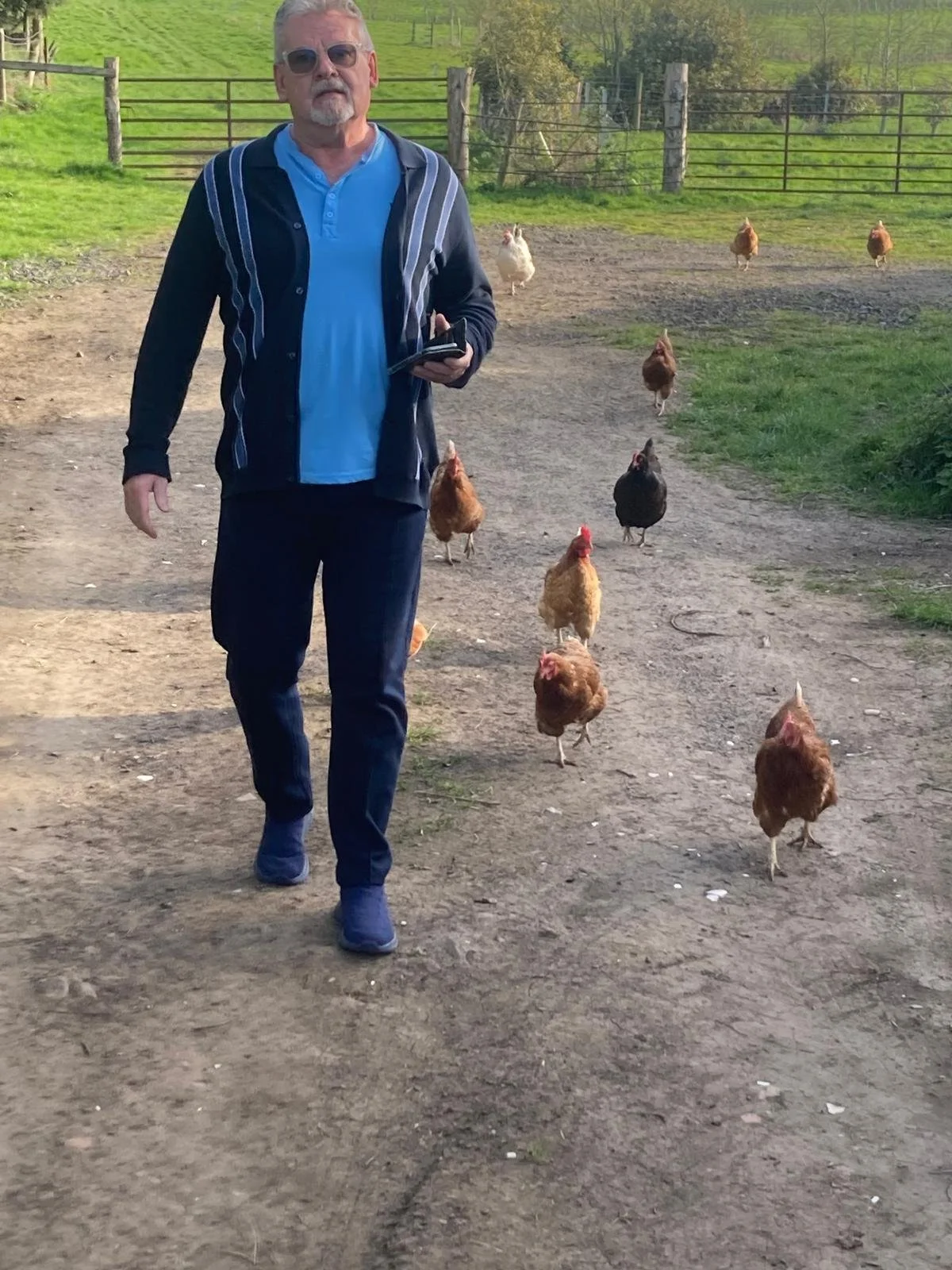
My background is in higher education where I was a Senior Lecturer at a London University, teaching student nurses, on the degree programme in Adult, Child, Mental Health and Learning Disability fields. I eventually went back into practice as a Specialist Community Public Health Nurse (Health Visitor) then retired from the NHS, with a view to seeking a part time position that did not involve looking after people anymore!
I first came to Haye Farm in July 2025 and fell in love with the place. Having the opportunity to look after the animals in a voluntary capacity was key in my decision to move from East Sussex to Bewdley.
I particularly feel comfortable that Haye farm is not Dairy and that all the calves and lambs stay with their mothers. I also endorse that chickens should literally roam around the farm and understanding the meaning of ‘free range’. I have a soft spot for all our chickens if I’m honest and they seem to like me too.
I had not really understood what Regenerative Farming was until witnessing it for myself on a daily basis. I’m now happy to be part of the team working four days a week, learning new skills, obtaining the extended knowledge required and gaining ongoing valuable experience, as no two days are the same.
I get so much pleasure caring for the animals and transferring my skills as a Registered Nurse where I assessed and observed adults, children and babies on a daily basis. I’m now doing the very same, but with farm animals instead, which I actually find more rewarding!